

 A water leak doesn’t give you much warning. One minute everything is fine, and the next you’re dealing with water pouring out from under a sink, behind a wall, or up through the floor. What you do in those first few minutes can make the difference between a minor repair and a major disaster. Here’s exactly what to do when a water leak strikes—and when it’s time to call in the professionals.
Minute 1: Shut Off the Water
This is the most important step, and it needs to happen fast. The longer water flows freely, the more damage it does to your floors, walls, drywall, and anything else in its path.
If the leak is coming from a specific fixture—like a sink, toilet, or washing machine—look for the shutoff valve nearby. For sinks and toilets, the valve is usually located underneath or behind the fixture. Turn it clockwise until it stops.
If you can’t locate an individual shutoff valve, or if the leak is more widespread, head straight to your main water shutoff. In most Louisiana homes, this is located near the water meter, outside the home, or in a utility area. Shut it off completely until the leak is under control.
Don’t skip this step or try to find the source of the leak first. Getting the water off is priority number one.
Minute 2: Turn Off Your Electricity (If Needed)
Water and electricity are a dangerous combination. If the leak is near any electrical outlets, appliances, or your electrical panel, turn off the power to that area of your home at the breaker box before you go anywhere near it.
If you’re not sure whether the affected area has electrical components nearby, err on the side of caution and cut the power. It’s not worth the risk.
Minute 3: Contain the Water
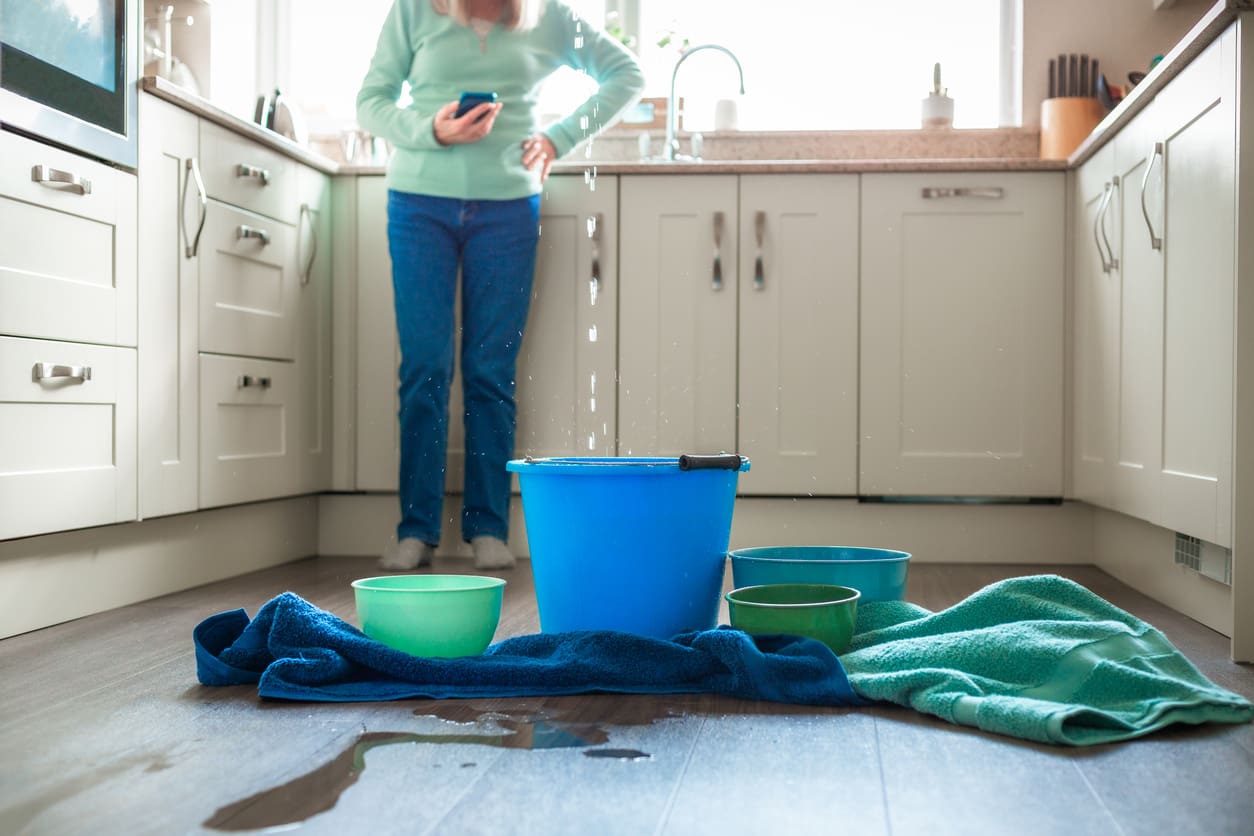
Once the water is off and you’ve addressed any electrical concerns, do what you can to contain the mess and limit further damage. Grab towels, buckets, and mops to soak up standing water. If water is dripping from the ceiling, place a bucket underneath and poke a small hole at the lowest point of the bulge—this controls where the water drains rather than letting it spread across the ceiling and cause more widespread damage.
Move any furniture, rugs, electronics, or valuables out of the affected area as quickly as possible. The faster you get items out of standing water, the better chance you have of salvaging them.
Minute 4: Find the Source
Now that the immediate danger is under control, try to locate where the leak is coming from. Common culprits include:
- Burst or cracked pipes – Often caused by age, corrosion, or in rarer cases here in Louisiana, freezing temperatures during cold snaps
- Leaking water heater – Look for pooling water around the base of the unit or dripping from the tank
- Failing appliance connections – Washing machines, dishwashers, and refrigerators with ice makers all have water lines that can fail
- Damaged supply lines – The lines running to your sinks and toilets can crack or disconnect over time
- Sewer or drain backup – If water is coming up through floor drains or backing up into tubs and sinks, you may be dealing with a sewer issue rather than a supply line leak
Identifying the source helps you give useful information to your plumber when you call—and it can also help you determine how urgent the situation is.
Minute 5: Call a Professional
This is not the time for a DIY patch job. Water leak repair needs to be handled correctly the first time. A temporary fix might stop the immediate flow, but if the underlying problem isn’t addressed properly, you could be dealing with hidden moisture buildup, mold growth, or structural damage down the road.
Call a licensed plumber as soon as possible and describe what you’re seeing—where the leak appears to be coming from, how much water you’re dealing with, and whether you’ve been able to shut off the water supply. A good plumber will be able to give you guidance over the phone while getting someone dispatched to your home.
What Happens If You Wait?
It might be tempting to wait and see if the problem resolves itself, or to put off calling until a more convenient time. But water damage escalates quickly. Within the first 24 hours, water can seep into subfloors, insulation, and wall cavities. Within 48 hours, mold can begin to develop. What starts as a manageable water leak repair can turn into a full-scale remediation project if it’s not addressed promptly.
The cost of water damage repair is almost always significantly higher than the cost of addressing the leak early. Acting fast protects both your home and your wallet.
Signs You May Have a Hidden Leak
Not every water leak is obvious. Some leaks happen slowly behind walls or under slabs and go undetected for weeks or even months. Watch for these warning signs between emergencies:
- An unexplained spike in your water bill
- Damp or warm spots on floors, walls, or ceilings
- The sound of running water when everything is turned off
- Mold or mildew growth in unusual places
- A drop in water pressure throughout the home
- Musty or sewage-like odors
If any of these sound familiar, don’t wait for a full-blown emergency. Scheduling a leak detection service early can save you from a much bigger headache later.
Trust Goodbee Plumbing for Fast, Reliable Water Leak Repair
When a water leak strikes, you need someone you can count on to respond quickly and fix the problem right. At Goodbee Plumbing, we’ve been providing fast, professional water leak repair to homeowners across the Northshore and greater New Orleans area for over 25 years. From Covington and Mandeville to Metairie, Hammond, Ponchatoula, and beyond, our licensed and insured team is ready to help.
We use the latest leak detection technology to locate even the most stubborn hidden leaks—without unnecessary damage to your property. Same-day service is available for most jobs, and we’ll always give you an honest, over-the-phone estimate before any work begins.
Don’t wait on a water leak to care for your plumbing. Contact us to schedule your service today.