

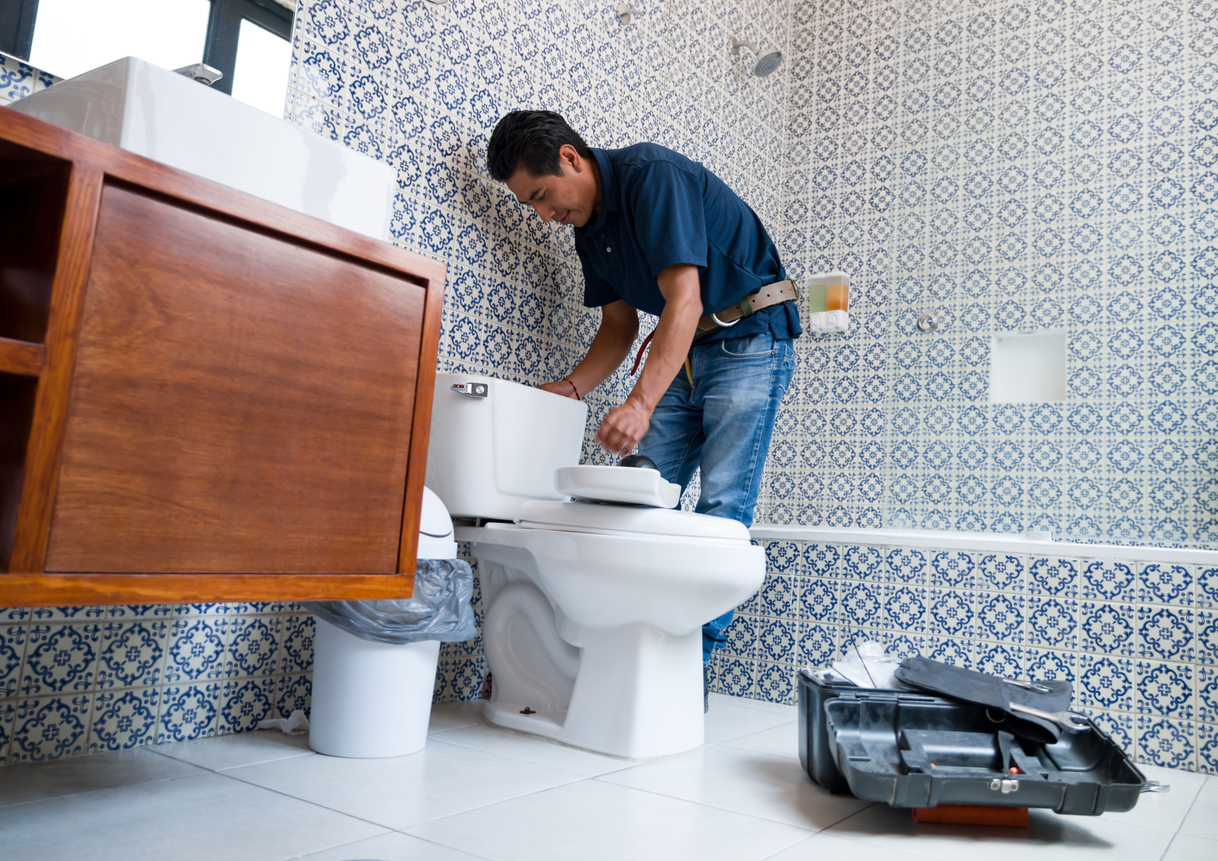
If you’ve got running water in your toilet that won’t stop, you may not just be dealing with an annoying sound. You’re likely also watching your water bill climb by the minute. A toilet left running can waste well over a hundred gallons of water a day, which adds up fast if it goes unnoticed for a week or two.
The good news? Most causes of a constantly running toilet are pretty simple to figure out, and a few are even easy enough to fix yourself. Here’s what’s likely going on, how to check for it, and when it’s time to give Goodbee Plumbing a buzz.
Why Won’t My Toilet Stop Running?
A toilet that keeps running is almost always caused by one of a few common culprits inside the tank. Here’s what to check first.
The flapper isn’t sealing. The flapper is the rubber piece at the bottom of the tank that lifts up when you flush and drops back down to seal the tank. Over time, flappers can warp, crack, or collect mineral buildup, which keeps them from forming a tight seal. If water is quietly trickling into the bowl even when you haven’t flushed, a worn-out flapper is usually to blame.
The chain is tangled or too long. Take the tank lid off and look at the chain connecting the flush handle to the flapper. If it’s too long, it can get caught under the flapper and hold it open just enough to let water leak through. If it’s too short, the flapper might not seal all the way. Either way, a quick chain adjustment can solve the problem.
The fill valve is faulty. The fill valve controls how much water refills the tank after a flush. If it’s worn out or set too high, water can continuously spill into the overflow tube, which sounds a lot like running water that never quits.
The float is set incorrectly. The float tells the fill valve when to stop filling. If it’s positioned too high, the tank will overfill and constantly drain into the overflow tube.
There’s a crack in the tank or bowl. This one’s less common, but if you’ve ruled out everything else and water is still disappearing, check for hairline cracks in the tank or where the tank meets the bowl. Cracks can cause slow, steady leaks that are easy to miss until you notice a damp spot on the floor.
All of these parts work together every time you flush, so when one piece is even slightly off, the whole system can end up running longer than it should.
Quick Fixes You Can Try
- Jiggle the handle. Sometimes all it takes is a quick jiggle to reset the flapper into place. If this fixes it every time, though, it’s a sign of a bigger issue underneath.
- Check and adjust the chain. Make sure there’s a little slack — not too much, not too little.
- Inspect the flapper. If it looks worn, warped, or coated in mineral deposits, a replacement flapper is an inexpensive fix from most hardware stores.
- Lower the float. If water is spilling into the overflow tube, adjusting the float down slightly can stop it.
- Try the food coloring test. Not sure if water is leaking from the tank into the bowl? Add a few drops of food coloring to the tank water and wait about 15 minutes without flushing. If color shows up in the bowl, you’ve confirmed a leak — most likely from the flapper.
How Much Water (and Money) Does a Running Toilet Waste?
It’s easy to shrug off a running toilet as a minor inconvenience, but the numbers add up quickly. A toilet that runs continuously can waste hundreds of gallons of water in a single day, depending on the size of the leak. Multiply that across a week or a month, and you’re looking at a noticeable jump on your next water bill. Catching and fixing the issue early is one of the simplest ways to keep your utility costs in check.
Preventing Future Toilet Troubles
Once your toilet is running smoothly again, a little routine maintenance can help keep it that way:
- Check the flapper every so often. Rubber flappers naturally wear down over time, especially in areas with hard water. Swapping them out every couple of years can prevent surprise leaks.
- Avoid drop-in bowl cleaners with bleach. These can be tough on rubber components inside the tank and speed up wear on the flapper and seals.
- Keep an eye (and ear) out. If you notice your toilet running longer than usual after a flush, or hear water trickling when nobody’s used it recently, it’s worth a quick peek inside the tank before it becomes a bigger problem.
When to Call a Professional
If you’ve tried the DIY fixes above and your toilet is still running, or if you’re just not comfortable poking around inside the tank, it’s time to contact a professional. A running toilet that goes unaddressed can waste hundreds of gallons of water and drive your utility bill up fast — not exactly the kind of surprise anyone wants. And if the issue turns out to be a cracked tank, a faulty valve, or something further down the line, it’s best to have a trained eye take a look before the problem gets worse.
At Goodbee Plumbing, we’ve spent over 25 years helping homeowners and businesses across the Northshore and New Orleans area with everything from a simple running toilet to full plumbing inspections and repairs. We’ll track down the source of the problem, walk you through your options, and get things fixed right the first time.
Buzzing Around Your Neighborhood
Whether you’re in Covington, Mandeville, Metairie, Hammond, Ponchatoula, Slidell, or anywhere throughout St. Tammany Parish, Tangipahoa Parish, Jefferson Parish, or Orleans Parish, our team is ready to help when your toilet won’t quit running.
Ready to get that running water sorted out for good? Schedule your service today, or give us a buzz to get an over-the-phone estimate!